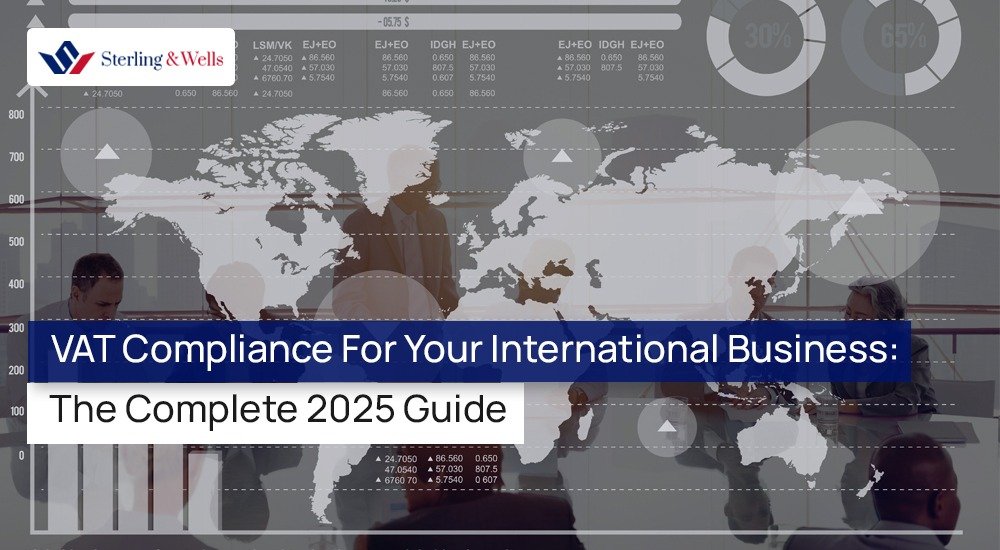
Navigating international markets presents unprecedented opportunities, but with them come a web of tax obligations. And none are more relentless than those surrounding VAT compliance. Whether you run an e-commerce company selling goods to customers abroad or offer B2B or B2C services across borders, compliance of VAT should be high on your agenda.
Regulatory authorities worldwide are tightening controls, mandating faster digital reporting and increasing penalties for even small mistakes. If your growth ambitions extend past your home market, it’s time to master global compliance.
What is VAT Compliance & Why Does It Matter?
Put simply, Value-Added Tax (VAT) is a consumption tax charged on most goods and services in over 160 countries. It differs from sales tax in that it’s usually applied at each stage of the supply chain, not just the final sale. For international businesses, compliance means following all regulations for registration, invoicing, reporting and remittance in each country where VAT applies to your activities.
Why does it carry so much weight? Tax authorities are digitally connected, and governments want their fair share from cross-border commerce. Mistakes or oversights can bring audits, significant fines or even operational bans in major markets.
Recognizing When VAT Compliance Becomes an Obligation
VAT compliance isn’t optional for international businesses. The moment your sales or service provisions cross into new countries, you’re exposed to new VAT rules. Typically, it becomes mandatory if:
-
You reach a country’s revenue threshold for non-resident companies (thresholds can be zero for digital supplies)
-
You hold inventory or operate warehouses in a foreign jurisdiction
-
You import goods for sale into another country
-
You use local fulfillment centers, such as Amazon FBA in the EU
Notably, the European Union mandates compliance of VAT for any B2C distance sales above €10,000 across the bloc, while most non-EU countries often require you register for VAT before your first taxable sale, even with no location there.
Failing to spot when it is triggered is a costly error for expanding firms.
How to Register for International VAT Compliance
Once you know you’re liable for VAT in another jurisdiction, registration is the foundation of your compliance. Each country (and sometimes region) has its own process. In the EU, you may benefit from the One-Stop-Shop (OSS) for digital and goods sales to consumers, reducing the need for multiple VAT numbers. Elsewhere, you may have to register individually with national authorities.
Registration for compliance of VAT typically involves:
-
Providing company formation documents
-
Supplying proof of foreign business activity (invoices, contracts)
-
Assigning a fiscal representative if required by the country
-
Securing a VAT number before making any taxable supplies
Timely compliance means registering before you supply goods or services. Some tax authorities even monitor online sales and payment processors for non-compliant overseas vendors.
Charging & Collecting VAT Correctly
After registration, your next step is charging VAT at the correct local rate. You must:
-
Add VAT (at the proper national or regional rate) to invoices for goods or taxable services sold in that country
-
Update your e-commerce checkout or accounting software to ensure VAT is calculated and displayed properly for each buyer’s location
Failing to charge VAT correctly will either erode your margins (if you fail to collect) or could get you in trouble with authorities (if you charge but do not remit).
Digital platforms and marketplaces (such as Amazon, Shopify and Airbnb) often facilitate local VAT compliance for sellers. Still, ultimate responsibility often remains with the underlying business, especially for B2B transactions or direct international sales.
Issuing VAT Invoices
Any business serious about compliance of VAT must issue valid VAT invoices. While requirements vary by country, they typically include:
-
Seller’s and buyer’s names and addresses
-
A unique invoice number and date
-
The seller’s VAT registration number
-
A clear description and quantity of goods or services supplied
-
The VAT rate, VAT amount and total price (both net and gross)
Some countries permit simplified invoices for low-value sales while others enforce strict electronic invoicing (e-invoice) rules. Mistakes on invoices such as a missing VAT number or incorrect rate can jeopardize VAT compliance and lead to denied tax deductions or repayments.
Maintaining Rigorous Records
Accurate and organized records are the bedrock of global compliance. Most jurisdictions mandate that you retain transaction documents like invoices, receipts, credit notes and digital logs for at least 5 to 10 years.
And record-keeping cuts both ways. You must archive proof of VAT paid (for reclaiming input VAT) as well as output VAT (charged to customers). For cross-border compliance, maintain copies of customs import/export paperwork, shipping documents, and intercompany contracts to support your filings.
Tax authorities may audit foreign companies. Lacking suitable records can mean denied VAT recovery or heavy fines, so treat record maintenance as a frontline business priority.
Struggling with VAT Compliance?
Penalties, audits, and blocked sales are real risks if your business isn’t VAT compliant. Don’t wait until it’s too late.
Filing VAT Returns: Meeting Each Country's Timetable
A large part of compliance is correctly filing periodic VAT returns. Depending on the jurisdiction, these can be monthly, quarterly or annually. You’ll need to summarize the total VAT charged (output VAT), VAT paid on business purchases (input VAT) and calculate your net liability.
The VAT return process is now digitized in many countries, driven by initiatives like the EU’s VAT in the Digital Age (ViDA) reforms and similar moves in Asia and South America. Incomplete, delayed or inaccurate filings can result in automatic penalties, making timely and precise compliance of VAT essential for your international operations.
Paying VAT & Claiming Refunds
After submitting a VAT return, most businesses must remit the net VAT amount to the national tax authority. Some countries accept international bank transfers while others require funding a local VAT account or using a tax agent.
If your input VAT (what you paid suppliers) exceeds output VAT (what you collected from customers), you may claim a VAT refund. This is common for exporters, new subsidiaries ramping up costs, or those transacting in zero-rated categories. Ensure your documentation is robust, as tax authorities often scrutinize VAT refund claims as part of their VAT compliance enforcement.
E-Invoicing & Digital Reporting
The transition to digital tax reporting is one of the biggest compliance challenges of 2025. The EU, Latin America, and many Asian countries are increasingly requiring continuous transaction controls (CTC), e-invoice uploads or standard digital filing schemas.
For international businesses, robust ERP systems and compliance tools are now essential. Modern solutions automate e-invoice creation, validate addresses and VAT numbers, calculate rates and submit VAT returns in approved electronic formats. Relying on spreadsheets alone for compliance in this era risks late or incomplete filings and avoidable penalties.
Dealing with Multiple Jurisdictions & VAT Numbers
Global VAT compliance is complex because each country’s rules differ. Key issues include:
-
Multiple VAT registrations and numbers, each needing its own records, filings and returns
-
Cross-border supply chains raising questions about place of supply and which country’s VAT applies
-
Different thresholds, penalties and audit rules for each market
Understanding where and when to register for VAT, and centralizing your compliance calendar and documentation, is critical for staying on top of . Many growing firms rely on specialist consultants or software to coordinate multi-country operations.
Avoiding Common VAT Compliance Mistakes
International businesses routinely fall into these traps:
-
Registering late or failing to register in every required country, resulting in unraveled transactions and tax authority demands
-
Applying the wrong VAT rates or misclassifying products/services
-
Neglecting digital reporting changes (e.g., missing e-invoicing deadlines)
-
Poorly structured documentation leading to denied input VAT recovery
-
Not monitoring threshold changes or local legislative updates
Guard against these by scheduling regular compliance audits and staying informed on evolving regulations with support from international tax experts or trusted legal advisors.
Professional VAT Compliance Support
Due to fast-evolving global VAT rules, many businesses now outsource some or all tactics to specialists. These partners can help:
-
Track and manage registration and filing obligations in each operating country
-
Advise on tax-efficient structures that minimize risks and maximize reclaim opportunities
-
Provide technology platforms that streamline invoicing, returns, and cross-border documentation
-
Offer rapid updates on legal changes that affect ongoing VAT
While there’s a cost, the strategic value and risk reduction are significant, especially for companies expanding into new or more complex VAT environments. And there’s no better VAT specialist for the UK than Sterling & Wells.
Conclusion
The stakes in VAT compliance have never been higher for international businesses. Committing to timely registration, robust digital reporting, diligent record-keeping, and the right technology are now inseparable from sustainable cross-border growth.
Stay ahead of the curve, keep your systems sharp, and lean on expert support when needed. That’s how leading global businesses protect themselves—and thrive—in a world of ever-tougher VAT enforcement.